
Formwork Plywood
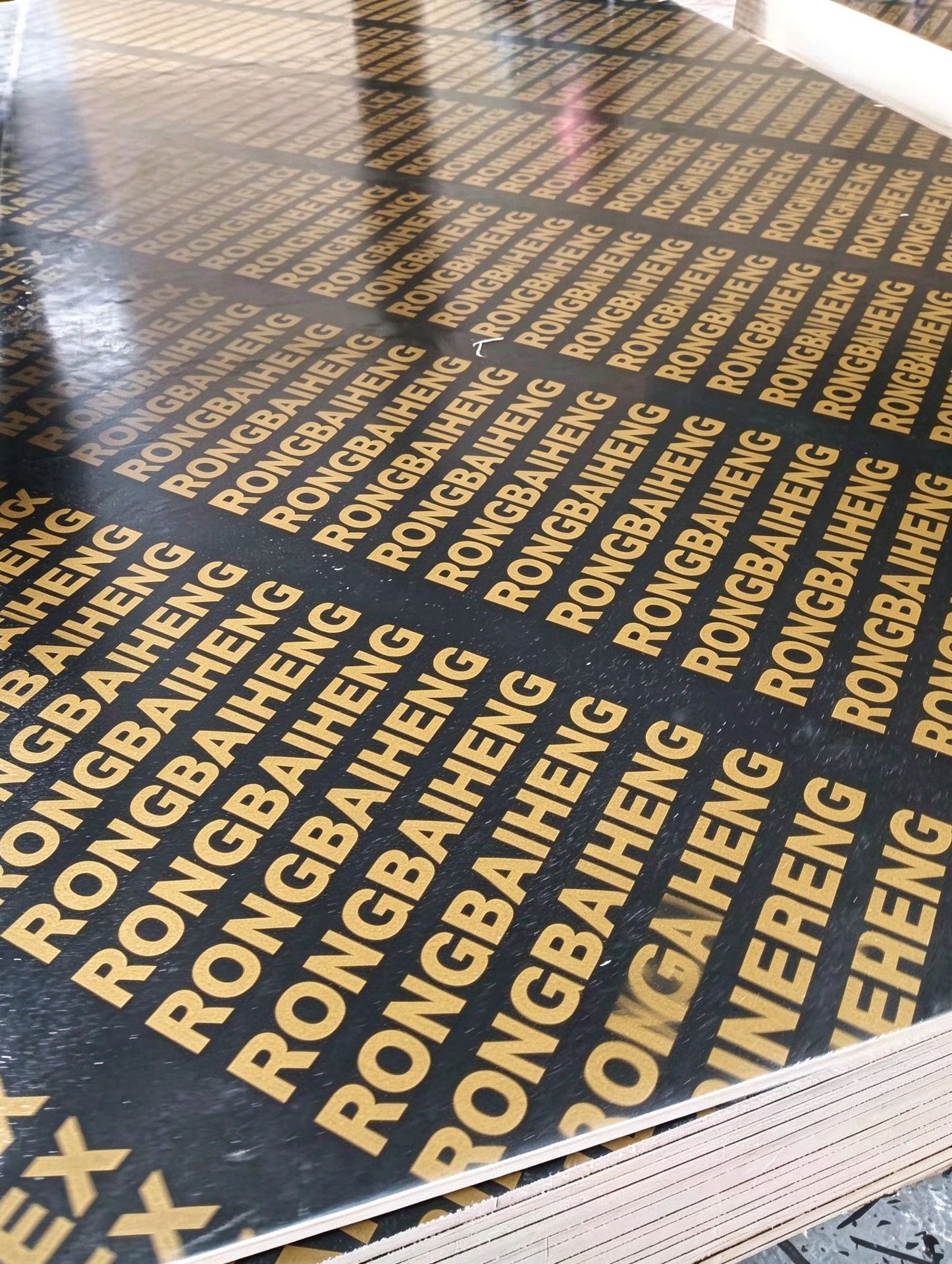
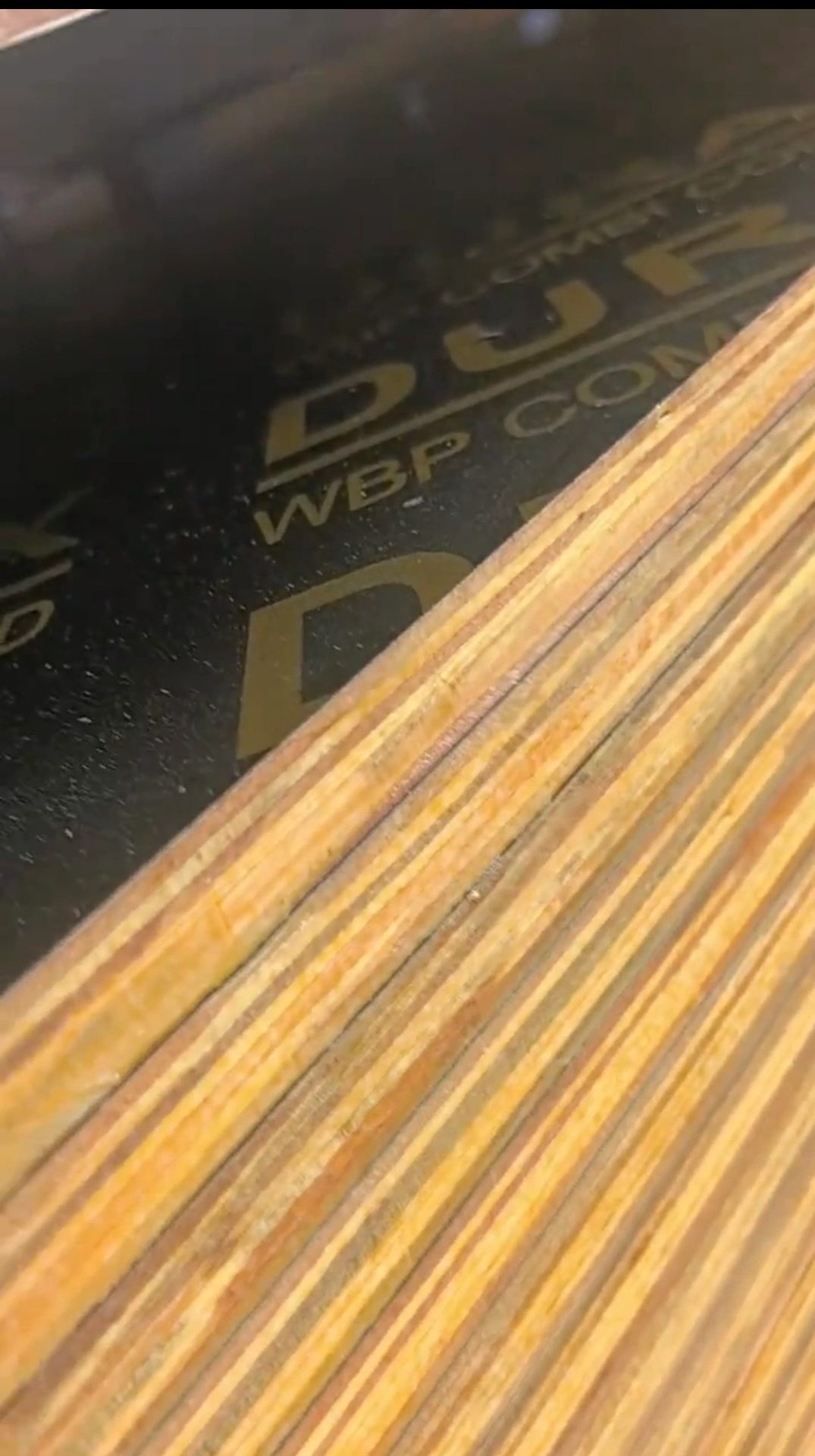
The engineering view of the same panel: combi core of eucalyptus, pine and fir, WBP phenolic glue, and measured strength values from a CMA-accredited laboratory on the 18 mm.

What the panel has to do
A formwork panel has four jobs: carry the pressure of fresh concrete without excessive deflection, hold the shape drawn on the setting-out, release from the concrete without damaging the face, and survive being stripped and re-set. The first two are decided by thickness and core; the last two by the film and the glue.
That is why the same panel is specified by number in one market and by trade name in another. Here the numbers are given.
| Size | 2440 × 1220 mm (8 × 4 ft) |
| Thickness | 12 / 15 / 18 / 20 mm |
| Core | Combi core: eucalyptus, pine, fir — glue on every ply |
| Glue | WBP phenolic, boil-proof 72 h |
| Face | Black phenolic film 60 g/m², finished 180–185 g/m² |
| Moisture content | 9 % measured on the 18 mm sample |
| Thickness tolerance | ±0.5 mm |
| Test report | CMA JC21-WT0099, basis GB/T 17657-2013 |
The numbers from the report, and what they are not
Values below come from CMA report JC21-WT0099 on an 18 mm film-faced panel, tested to GB/T 17657-2013. They are material test values, not design values.
| Static bending strength, lengthwise | 50 MPa | 43 MPa |
| Static bending strength, crosswise | 40 MPa | 30 MPa |
| Modulus of elasticity | 6,110 MPa | 4,630 MPa |
| Bonding strength | 0.7–1.9 MPa | |
| Moisture content | 9 % | |
The two figures in the strength rows are the range measured across the sample set, not two different products. A designer calculating formwork pressure must apply their own safety factor and drying-wetting reduction; the report states what the panel measured in the laboratory, and that is all it states. Buyers who need the full report pages get them with the quotation.
Combi core, and why it is written that way
The core is a combi core: eucalyptus, pine and fir veneers combined in one panel, with glue applied to every ply. We do not describe it as a single-species core, because it is not one. Written as combi core on every document, with the three species named next to it, so a buyer comparing us against a poplar-core offer knows exactly what is in the container.
Mixed cores are normal in this segment and are not a downgrade. What matters is that the mix is declared and the glue line is controlled.
Two-stage pressing at 130 °C
Seven hot presses run two-stage cycles at 130 °C, nine lines, about 260,000 panels a month at the Boxiang plant in Pinghe, Zhangzhou. Two-stage pressing is what drives the glue cure through a mixed core without scorching the face film — the reason a mixed core can still pass a 72-hour boil test.
Capacity and plant details are on factory and capacity; the batch controls are on quality.
Three questions from engineers
Can the report values be used directly in a formwork calculation?
No. They are laboratory material values on a dry sample. A formwork design has to apply its own safety factor, account for moisture cycling on site, and check deflection against the pressure of the concrete being placed. We supply the measured values; the design remains the engineer's.
What happens to strength when the panel gets wet?
The WBP phenolic glue is boil-proof for 72 hours and the panel is built for wet concrete, but a plywood panel is not a steel plate: repeated soaking and drying reduces stiffness over the life of the panel. Edge sealing and dry storage between pours are what keep it near the tested values.
Which thickness for a high-rise core?
18 mm is the usual answer for cores and shear walls, with 20 mm where the pour height or the re-use plan calls for more stiffness. The final choice belongs to the formwork designer; we quote whatever thickness the drawing specifies.